Preheat your oven to 350°F and line a baking sheet with parchment paper or silicone baking mat. This ensures even browning and makes cleanup easy. Getting the oven ready first allows it to reach temperature while you prepare the dough.
In a medium bowl, combine the creamy peanut butter and pure maple syrup, stirring until completely blended and smooth. The maple syrup acts as both sweetener and binder in this minimal-ingredient cookie. I like to use a rubber spatula for this step—it helps incorporate everything more thoroughly than a spoon and ensures you don't miss any peanut butter stuck to the bottom of the bowl.
Stir the vanilla extract and sea salt into the peanut butter mixture, then fold in the chocolate chips until evenly distributed throughout the dough. The vanilla enhances sweetness without adding sugar, while the salt amplifies the chocolate flavor and prevents the cookies from tasting one-dimensional.
Refrigerate the dough for at least 2 hours (or freeze for 1 hour). Chilling is essential for these cookies—without it, the soft dough will spread too much during baking and won't hold its shape. The cold dough also develops more flavor as the ingredients meld together.
Scoop the chilled dough into 12 equal portions using a cookie scoop or tablespoon measure, then roll each portion between your palms into a ball. Place the balls on the prepared baking sheet, spacing them about 2 inches apart to allow room for slight spreading. I recommend wetting your hands slightly before rolling—it prevents the sticky dough from clinging to your skin without adding extra moisture to the cookies.
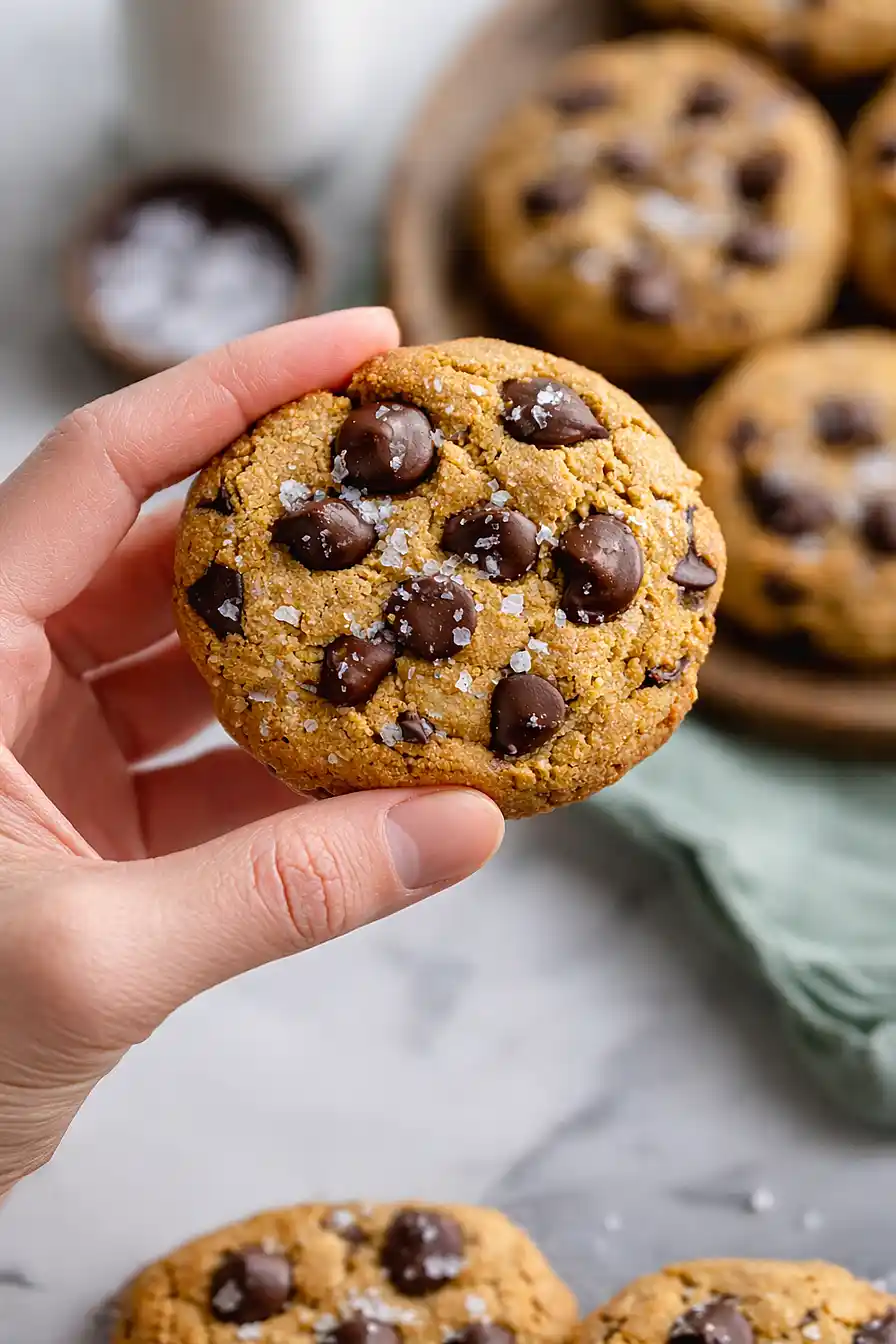
Bake the cookies for 10-12 minutes, until the edges are set but the centers still look slightly underdone. They will continue cooking on the hot pan after removal from the oven. The cookies should be firm enough to remove from the sheet but still soft and chewy inside.
Allow the cookies to cool on the baking sheet for 5 minutes, then transfer them to a wire rack or serving plate to cool completely. This resting time on the hot pan allows them to firm up enough to move without breaking apart, while cooling on a rack prevents the bottoms from becoming soggy.