Combine ground flaxseed and water in a small bowl and let sit for 5 minutes to create a flax egg—this will bind the dough since we're skipping traditional eggs. While it's setting, measure out all your dry ingredients (flour, cornstarch, baking soda, salt, and espresso powder if using) into a separate bowl and whisk them together. This prevents lumps and ensures even distribution of the leavening agents throughout your cookies.
Preheat your oven to 350°F and line your baking sheets with parchment paper. In a large mixing bowl, beat the softened vegan butter and packed brown sugar together for 1-2 minutes until the mixture is light and fluffy—this incorporates air into the dough, which helps the cookies rise and creates a better texture. I find that using firmly packed brown sugar is essential here; it adds moisture that keeps vegan cookies from drying out.
Stir the flax mixture from Step 1 and the vanilla extract into the creamed butter and sugar until fully combined. The flax egg will look slightly thick and gelatinous, and that's exactly what you want—it helps bind all the dry ingredients and adds structure to your cookies.
Gently fold the dry ingredient mixture from Step 1 into the wet mixture using a spatula or wooden spoon. Mix just until no flour streaks remain—overmixing can make cookies tough, so stop as soon as everything comes together.
Fold the chocolate chips into the dough from Step 4, distributing them evenly throughout. Drop rounded tablespoons of dough onto your prepared baking sheets, spacing them about 2 inches apart to allow for spreading. I like to slightly flatten each mound with the back of a spoon so the cookies bake more evenly.
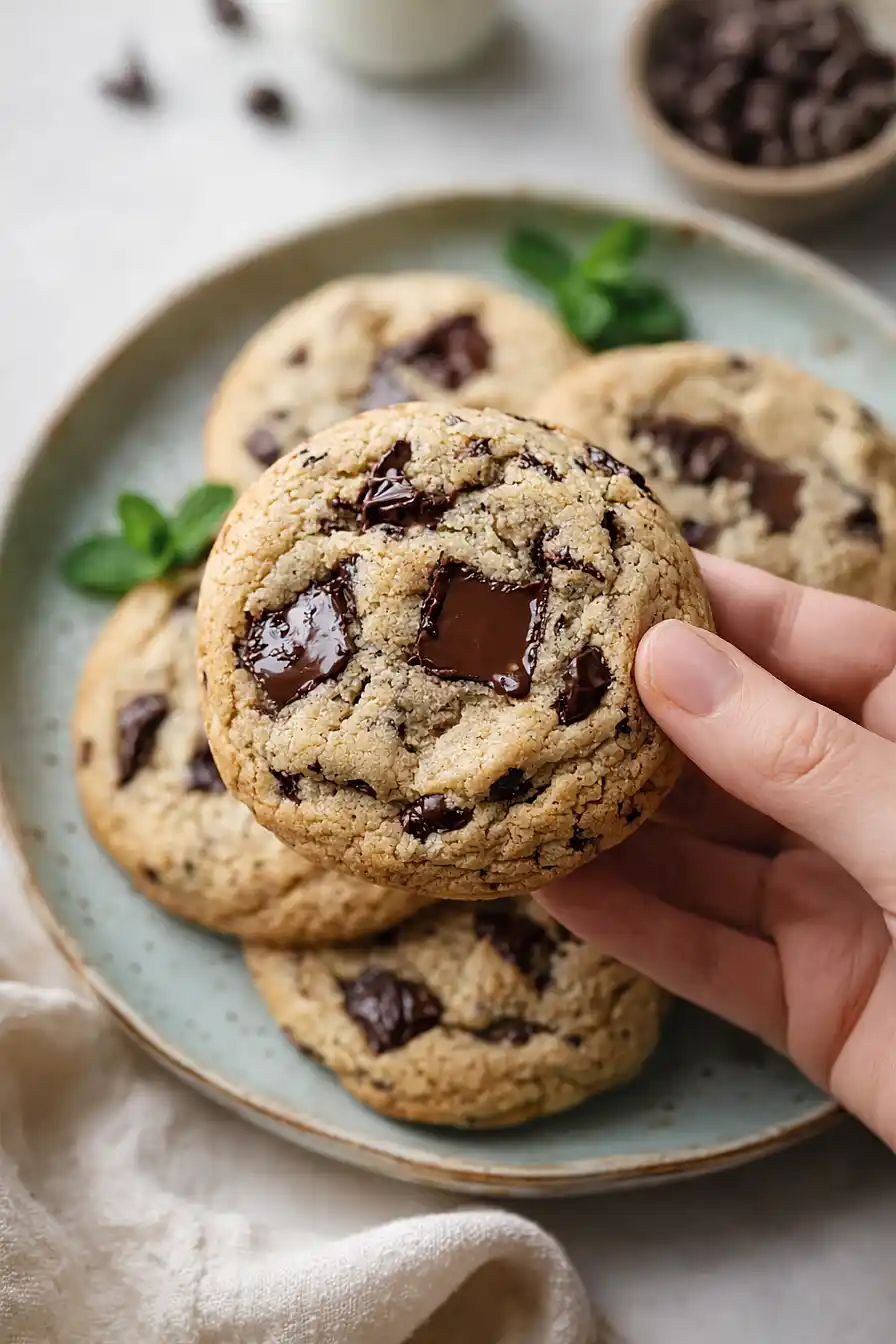
Bake for 10-12 minutes until the edges are set but the centers still look slightly underdone—they'll continue cooking as they cool and will have a perfect chewy center. Remove from the oven and let the cookies rest on the baking sheet for 5 minutes, which allows them to firm up slightly, then transfer them to a wire cooling rack to cool completely. This two-stage cooling prevents them from being too delicate to handle while keeping them soft inside.